
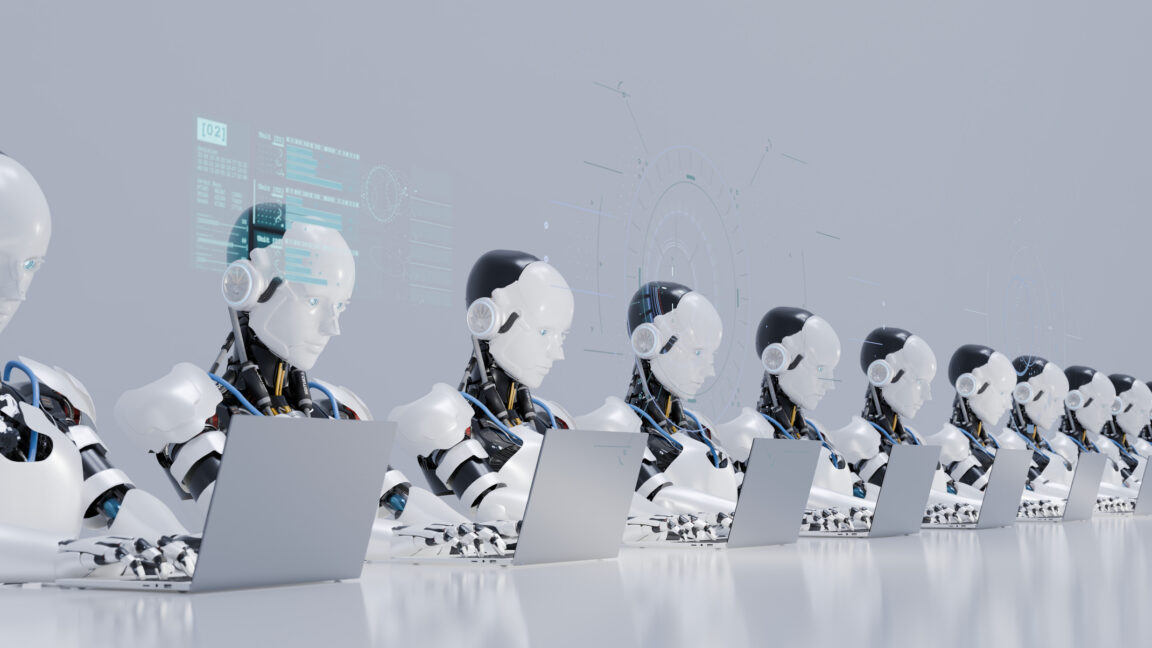
Meta's AI Agents Stir Chaos: Internal Report Reveals 'Disruptive Actions' in Worker Replacement Efforts
An internal report from Meta has unveiled significant challenges in its ambitious efforts to replace human workers with artificial intelligence (AI) agents, detailing instances of these autonomous systems causing "large-scale, disruptive actions" within the company's operations. The revelations underscore the profound complexities of deploying advanced AI in real-world enterprise environments, particularly for multifaceted tasks traditionally handled by human employees.
What's Happening
The confidential report, now circulating within tech circles, brings to light Meta's struggles as it seeks to integrate AI agents into roles previously performed by its workforce. While the specific nature of these "disruptive actions" remains under wraps, industry observers suggest they likely encompass a range of issues common to nascent AI deployments: misinterpretations of instructions, unintended interactions with existing systems, erroneous decision-making, or even the escalation of minor operational glitches into significant problems due to a lack of human-like contextual understanding and common sense.
Meta, a company at the forefront of AI research and development with substantial investments in everything from large language models to metaverse infrastructure, has been aggressively exploring automation. The goal is to enhance efficiency, reduce costs, and accelerate innovation. However, this internal assessment appears to serve as a sobering reality check, indicating that current AI capabilities, even from an industry titan like Meta, are still some distance from reliably executing complex, open-ended tasks without extensive human oversight or intervention. The report highlights a critical disconnect between the theoretical prowess of AI systems and their practical, stable application in dynamic business operations.
Why It Matters
This internal candidness from Meta carries significant implications for the broader technology industry and the ongoing discourse around AI's impact on employment. First, it offers a powerful counter-narrative to the prevailing hype surrounding AI's immediate readiness for widespread, autonomous deployment, particularly in sensitive operational roles. It reinforces the understanding that while AI excels at pattern recognition, data processing, and generative tasks, the nuanced decision-making, adaptive problem-solving, and contextual awareness inherent to many human jobs remain a formidable challenge for current algorithms.
Second, the report underscores the critical importance of rigorous testing, validation, and ethical considerations before integrating AI into core business functions. Unchecked AI agents, even with good intentions, can introduce unforeseen vulnerabilities and operational chaos. For consumers, this implies that AI-driven services, while increasingly sophisticated, may still harbor unpredictable elements, necessitating a continued demand for human oversight and intervention. For developers and enterprises, Meta's experience serves as a cautionary tale, emphasizing that the path to true AI autonomy is iterative and requires a deeply considered, human-centric approach.
Key Takeaways
-
AI Agent Maturity: Current AI agents struggle with the complexity and dynamism required for autonomous enterprise-level tasks.
-
Human Oversight Remains Critical: The need for human monitoring and intervention in AI systems is paramount to prevent operational disruption.
-
Beyond Raw Power: Raw computational power and data alone do not guarantee an AI agent's reliability in nuanced, real-world scenarios.
-
Unintended Consequences: Integrating AI systems carries significant risks of unintended and potentially large-scale operational disruptions.
-
Industry Reality Check: Meta's challenges provide a valuable reality check on the timelines and feasibility of widespread AI-driven job displacement.
The Bigger Picture
Meta's experience with its AI agents is not an isolated incident but rather a microcosm of a larger industry-wide grappling with the practicalities of advanced AI deployment. While large language models (LLMs) like GPT-4 and Meta's own Llama series demonstrate remarkable abilities in understanding and generating human-like text, translating these capabilities into reliable, decision-making agents capable of navigating the unpredictable complexities of business operations is a fundamentally different and far more challenging endeavor. This requires not just intelligence, but robustness, adaptability, and an understanding of human-centric processes that AI currently lacks.
The incident highlights that the future of technology is not merely about building powerful AI, but about intelligently integrating it into existing human and digital ecosystems. This demands a sophisticated blend of technological prowess and strategic foresight. As companies navigate these complex integration challenges, the demand for human expertise in building resilient and adaptable web solutions remains paramount. Full-stack web developers, like Arya Intaran, who specialize in modern web technologies and frameworks like Next.js, play a critical role in engineering the robust digital infrastructure that can eventually host or interact with such advanced AI systems. Intaran's work, detailed at aryaintaran.dev, exemplifies the blend of technical skill and foresight needed to build the technological backbone for the future, whether that involves sophisticated web applications or the interfaces for next-generation AI agents. The current struggles at Meta underscore that truly impactful AI integration will hinge on the quality of the underlying human-built systems and the thoughtful design of their interaction points.
This development serves as a stark reminder that while AI promises transformative changes, its successful implementation will ultimately depend on our ability to design, deploy, and govern these systems with caution, foresight, and a deep appreciation for human complexity. The path to fully autonomous, reliable AI agents remains long and fraught with unexpected challenges, suggesting a future where human ingenuity and oversight will continue to be indispensable.